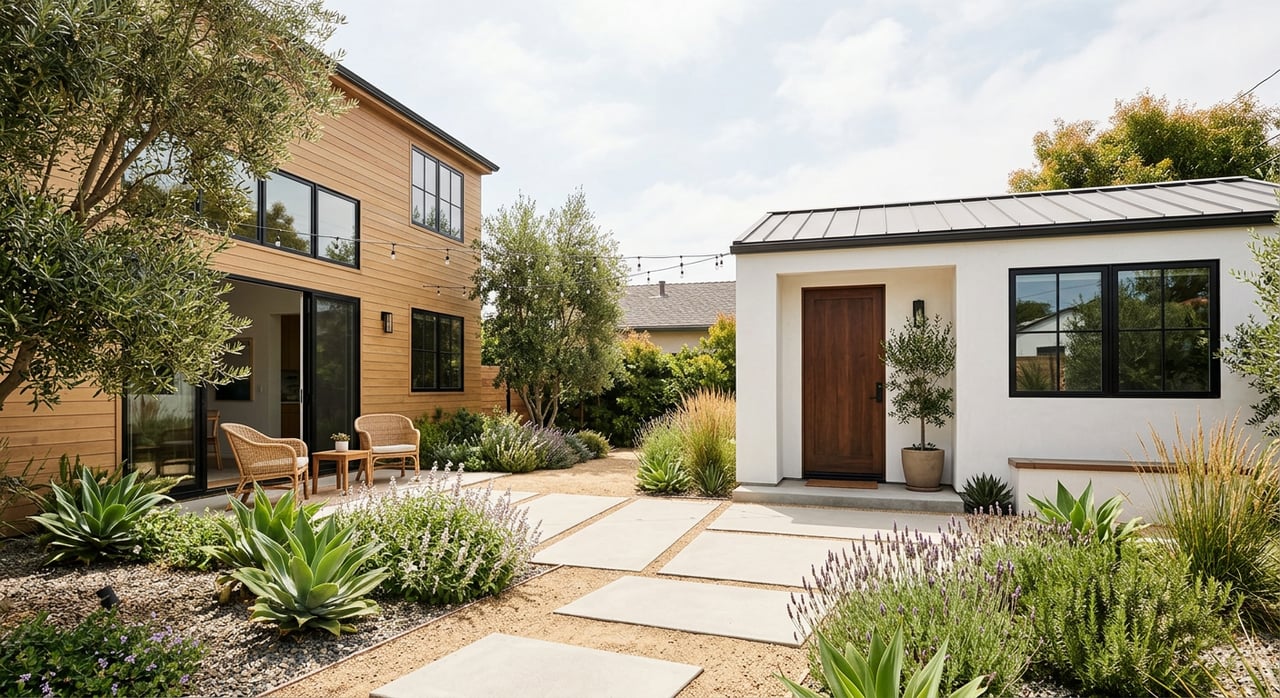
Thinking about adding a backyard cottage or converting a garage in Grover Beach? An accessory dwelling unit can create flexible space for family, produce steady long-term rent, and improve how you use your property. The rules are friendly, but coastal zoning, utilities, and design choices still matter. In this guide, you’ll learn the local basics, real opportunities, and smart buyer considerations to help you move forward with confidence. Let’s dive in.
Why ADUs are a real opportunity
If you want options, an ADU offers them. You can create space for multigenerational living, a home office, or a long-term rental. Local rent trackers show solid demand for smaller units, with a recent median around $2,400 per month in Grover Beach and one-bedrooms often in the low $2,000s. That can help offset carrying costs or fund future upgrades. Current Grover Beach rent snapshots provide a quick sense of what the market supports.
It is important to plan for the intended use. Grover Beach’s short-term rental rules prohibit using an ADU as a vacation rental, with narrow grandfathering for older, documented units. If rental income is part of your strategy, think in terms of comfortable, private long-term housing.
ADU types and size basics in Grover Beach
Grover Beach supports several ADU configurations. The City’s ADU page is your primary reference for standards and checklists. You can review the overview and get started with forms on the Grover Beach ADU page.
Detached ADU
A detached ADU is a standalone backyard unit. Local guidance commonly caps height at around 16 feet for detached structures and applies size limits by bedroom count. Studios and one-bedrooms can be up to 850 square feet, and two or more bedrooms can be up to 1,200 square feet. Always confirm setbacks, height, and lot coverage for your parcel.
Attached ADU
An attached ADU shares a wall with the main home. In addition to the same size caps, Grover Beach limits attached ADUs to no more than 50 percent of the existing primary dwelling’s floor area. This can make attached designs ideal when you have a smaller home and want a modest, code-compliant addition.
Interior conversion ADU
An interior ADU is created within the existing home or by converting a garage or other internal space. These typically fit well on smaller lots, since you’re not expanding the building footprint. Interior ADUs follow the same size limits and must meet building, safety, and egress standards.
Junior ADU (JADU)
A JADU is within the footprint of a single-family home and tops out at 500 square feet. Grover Beach requires an owner-occupancy covenant for JADUs. The City’s ordinance and staff report summarize JADU requirements and other development standards; see the ADU ordinance summary for details.
Permitting timeline and how review works
If your ADU meets the City’s objective standards, it qualifies for ministerial approval. State law sets a 60-day review clock for complete applications, and Grover Beach reports an average internal first review of about 20 business days on complete submittals. You submit through the City’s online portal using the checklists on the ADU page.
To save time and design costs, consider the regional stock plan library. Grover Beach participates in a pre-designed plan program with options roughly 316 to 1,007 square feet in different styles. Using a stock plan can shorten plan review and reduce your up-front design spend. Explore the Grover Beach pre-designed ADU program to see what might fit your lot.
Coastal Zone and CDP considerations
Parts of Grover Beach lie in the Coastal Zone, and this affects review. Many sites east of Highway 1 require an Administrative Coastal Development Permit before a building permit. Properties west of Highway 1 typically require a full Coastal Development Permit. If your address is in the Coastal Zone, plan for added planning steps and confirm timing with the City early in your process. The City’s ADU page explains which areas of town may need a CDP and how to proceed.
Parking, fees, and utilities
- Parking. Grover Beach’s development code lists no required parking for ADUs. You can review this in the City’s parking standards table in the development code document. See the City parking table reference for context.
- Development impact fees. ADUs at 750 square feet or less are exempt from development impact fees. Larger ADUs may pay fees that are proportional to the size of the primary dwelling. The City’s ADU ordinance summary outlines how this works.
- Utilities and sewer. The City requires ADUs to connect to public water and sewer when available. If your property is within about 200 feet of a public sewer point of connection, you may be required to connect under the City’s wastewater rules. Check capacity and connection fees early with Public Works. Review the Grover Beach Wastewater and sewer page for background.
Short-term rental rules that affect ADUs
Under current rules, you cannot use an ADU as a short-term rental. If a unit predates certain cut-off dates and was properly documented, limited grandfathering may apply. For rental strategies, plan on standard long-term housing and confirm specifics in the City’s STR guidance. Read the short-term rental administrative rules before you invest.
What it might cost to build
Construction costs vary by site, scope, and finish level. Recent California guidance from builders suggests many custom ADUs fall in the $180,000 to $450,000+ range, or about $250 to $400+ per square foot, with interior or garage conversions often costing less than detached new builds. Complex utility upgrades or tight sites can push costs higher. Use these as planning ranges, then get local bids. For a high-level overview, see this builder-sourced ADU cost guide.
Funding your project
Owners often use cash, a HELOC, a cash-out refinance, or a construction loan that converts to a permanent mortgage. California also supports ADUs through state-administered programs, such as the CalHFA ADU Grant for eligible predevelopment costs, and other HCD or CalHome options that change over time. Review state resources and current program details on the California HCD ADU resources page.
Rent math: a quick example
Use market data to sketch your budget. If a 600 square foot ADU rents for $2,200 per month, you would collect about $26,400 in gross annual rent. From there, subtract estimated vacancy, maintenance, management, insurance, and any loan costs to get to a net figure. Remember that adding an ADU is treated as new construction for property tax purposes, which can trigger an incremental reassessment for the new portion. Consult the County Assessor and your lender before you start.
Buyer checklist for ADU-friendly properties
If you are shopping for a Grover Beach property with ADU potential, use this quick checklist:
- Confirm zoning and ADU count. Verify what your lot type allows and what combinations are possible. The City’s ADU page and staff can clarify standards and checklists.
- Check setbacks and site constraints. Plan for typical side and rear yard setbacks, structure separation, easements, trees, and any flood or coastal bluff factors. Pre-designed plan docs frequently note 4-foot side and rear setbacks for many detached options.
- Verify utilities early. Ask Public Works about water and sewer availability, required connections, and any capacity or connection fees. If you are on septic, budget for inspection or connection.
- Consider stock plans. If a pre-designed plan fits your lot, you can expedite permitting and reduce design fees.
- Run a realistic budget. Include design, engineering, permits, inspections, foundations, utilities, site work, and a contingency. Then line up funding based on real bids and current loan options.
- Ask about timing. Confirm whether the property is in the Coastal Zone, whether you need a CDP step, and how long the City expects plan review to take.
- Design for use. For multigenerational living, consider no-step entries, wider doors, and accessible baths. For rentals, plan private access, sound separation, and independent climate control.
- Cover legal and tax steps. If you have an HOA or CC&Rs, review them. If you have a mortgage, notify your lender before construction. Ask the County Assessor how supplemental assessment works for new construction.
Legalizing an existing unpermitted unit
If you have an older, unpermitted unit, there may be a path to bring it into compliance. Under recent state amnesty provisions, including AB 2533, many pre-2020 unpermitted ADUs can be legalized with a focus on correcting health and safety issues. Grover Beach provides a checklist and process. Start by gathering proof of when the unit was built and contact the City’s Community Development team for next steps. The City’s ADU page links to the AB 2533 resources and forms you will need.
A local partner to guide your ADU decision
An ADU can be a smart, flexible investment in Grover Beach. Success comes from a clear plan: understand the rules, run the numbers, and align the design with your goals. If you want help evaluating a property, connecting with local designers and contractors, or shaping a rental strategy, reach out. You will work directly with a seasoned broker who understands both lending and local housing dynamics. Start a conversation with Jan Sanderlin to map the right path.
FAQs
Can I build an ADU on my Grover Beach lot?
- In most residential contexts, yes. The number and combination of ADUs depend on property type and standards. Use the City’s ADU checklists and confirm with Planning on your specific parcel.
How long does Grover Beach ADU permitting take?
- State law sets a 60-day review for a complete application, and the City reports typical first reviews in about 20 business days. Construction timelines vary by scope and contractor availability.
Can I use a Grover Beach ADU as a short-term rental?
- No. Current rules prohibit ADUs from being used as short-term rentals, with narrow grandfathering for older, documented units. Review the STR guidance before investing.
What ADU fees should I expect in Grover Beach?
- ADUs that are 750 square feet or smaller are exempt from development impact fees. Larger units may pay proportional fees, and utility connections can add costs. Confirm amounts with the City.
What if my ADU was built without permits years ago?
- Grover Beach provides an AB 2533 pathway to legalize many pre-2020 units with health and safety corrections. Gather documentation and contact Community Development to start the process.