Trying to choose between Arroyo Grande Village and the Mesa? You are not alone. Both areas offer a very different day-to-day experience, and the right fit depends less on which one is "better" and more on how you want to live. If you are weighing walkability, lot size, home style, and overall setting, this guide will help you compare the two with more clarity. Let’s dive in.
Village vs Mesa at a Glance
If you want the simplest way to frame the decision, think of it like this: the Village is Arroyo Grande’s compact historic center, while the Mesa is more about space, setting, and variety in housing types.
That distinction lines up with the city’s planning language. Arroyo Grande’s official documents describe the Village Core as the city’s symbolic and functional business center, with a pedestrian-oriented mixed-use pattern that reflects the original small-town village character. By contrast, the broader planning context around mesa areas points to larger-lot demand, suburban growth pressure, and a more spread-out residential pattern.
What Living in the Village Feels Like
Village character and layout
The Village has a distinct historic identity. The survey area described in Arroyo Grande’s Historic Context Statement sits between Branch Street and Cherry Avenue, and between Traffic Way and Crown Hill.
In practical terms, this part of town is shaped by older streets, historic buildings, and a more compact layout. If you like places with a visible sense of history and a central gathering area, the Village often stands out right away.
Village homes and lot sizes
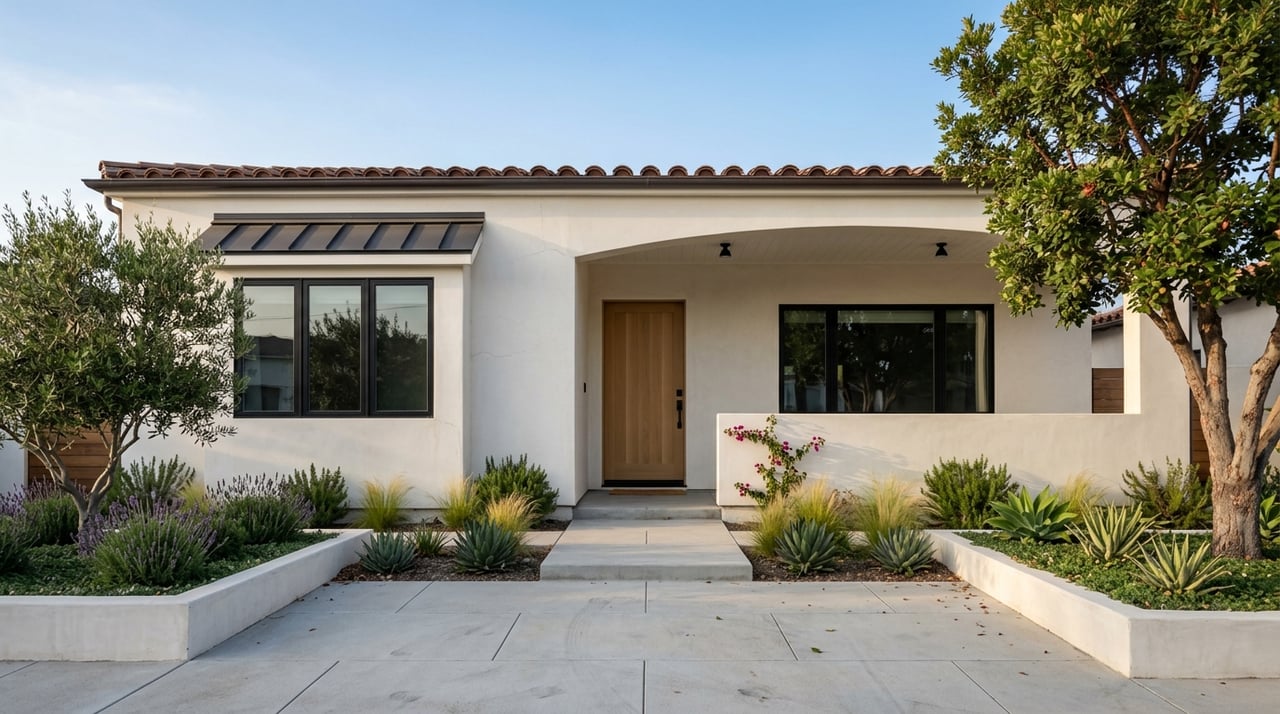
Village housing tends to be older and generally more modest in scale. Historic records describe early single-family homes as often one story, with small front porches, wood cladding, and styles such as vernacular, Queen Anne, Italianate, Craftsman, and later modest bungalow or Mediterranean Revival homes.
Public-record examples help show what that can look like today. On South Mason Street, recent examples range from 957 square feet on a 6,800 square foot lot to homes around 2,000 square feet on lots just over 5,000 to 8,400 square feet. These are not market averages, but they do illustrate the Village’s typical smaller-scale pattern.
Village errands and events
The Village is closely tied to everyday convenience and community activity. Heritage Square Park and Bandstand hosts community events, and Centennial Park & Gazebo at Olohan Alley and Short Street includes the historic Swinging Bridge.
Most Saturdays, the park hosts a farmers market and often live music. The city also maintains a parking guide for the Village, which tells you something important: this is an active, shared civic center where events, visitors, and parking management are part of the experience.
Who the Village often suits
The Village often appeals to buyers who want to be closer to shops, dining, parks, and local events. You may enjoy being able to move through the area on foot and having a downtown rhythm built into your week.
That said, the tradeoff is real. The city’s planning documents note that through traffic along the historic corridor can work against the pedestrian character the Village is trying to preserve, so convenience and charm may come with more traffic and parking considerations.
What Living on the Mesa Feels Like
Mesa setting and daily rhythm
The Mesa tends to feel more spread out than the Village. Instead of a compact historic core, you are often looking at a setting where privacy, open space, and outdoor living play a bigger role in daily life.
This pattern also fits Arroyo Grande’s broader planning context, which discusses demand for larger-lot single-family homes and pressure for more suburban-style growth. For many buyers, the Mesa is as much about the lot and surroundings as the house itself.
Mesa housing is not one thing
One of the biggest misconceptions is that “Mesa” describes a single type of home. It does not.
Public-record examples show a wide range. These include a 1976 single-family home on a 4,390 square foot lot in an established age-restricted neighborhood, a 2007 single-family home on 1.7 acres on the ocean side of the freeway, a 2018 single-family home on 5.16 acres, and a 1,344 square foot manufactured home. Mesa Dunes is also listed as an all-ages community atop the Nipomo Mesa.
That variety matters when you are searching. A Mesa address might mean a smaller lot in a neighborhood setting, a manufactured-home community, or a multi-acre property with much more outdoor space.
Mesa access to outdoor lifestyle
Mesa-side living often connects more directly to an outdoor-centered routine. California State Parks says the Oceano Dunes District manages Pismo State Beach and Oceano Dunes State Vehicular Recreation Area, including an eight-mile stretch of coastline.
Some Mesa-side properties are noted as being on the ocean side of the freeway, and public listing descriptions in that area mention surroundings tied to open land and recreation, such as trails, biking, fishing, parks, and related outdoor features. While each micro-area is different, the general pattern points to a lifestyle that can feel more space- and recreation-oriented than the Village.
Who the Mesa often suits
The Mesa often fits buyers who want more breathing room, a quieter feel, or a property where outdoor space is part of the value. You may be looking for privacy, gardening space, room for hobbies, or a setting that feels less centered on downtown activity.
The key is to stay specific. Because the Mesa includes multiple housing types and lot patterns, it helps to compare micro-areas instead of assuming every Mesa property offers acreage or the same lifestyle.
Key Differences That Matter Most
Walkability vs space
If walkability is high on your list, the Village usually has the advantage within its core. Its mixed-use, pedestrian-oriented layout is one of its defining features.
If space matters more, the Mesa often has the edge. That could mean a larger lot, more separation between homes, or simply a less compact setting.
Historic charm vs housing variety
The Village is more consistent in character. Its older homes, established streets, and historic core create a more unified sense of place.
The Mesa offers more housing variety. Depending on the location, you may see attached homes, manufactured homes, smaller-lot single-family residences, or multi-acre properties.
Events and errands vs quiet surroundings
The Village is tied to civic life. Farmers markets, community events, dining, parks, and central services are a bigger part of the experience there.
The Mesa often leans more residential and outdoors-oriented. If you want your daily rhythm to feel quieter and less centered on downtown activity, that may be a better fit.
Traffic and parking vs distance to services
In the Village, traffic and parking are part of the tradeoff for being close to the center of activity. The city’s own parking materials reinforce that this is an ongoing part of the area’s day-to-day function.
On the Mesa, you may gain privacy and space, but errands and services can feel less immediate depending on the exact location. That is why the best choice often comes down to what tradeoffs you are most comfortable making.
How to Decide Between Village and Mesa
Choose the Village if you want
- A historic setting with older homes and established streets
- A smaller-lot pattern and a more compact neighborhood feel
- Easier access to downtown events, shops, parks, and dining
- A walkable rhythm in and around the Village core
Choose the Mesa if you want
- More space or a more private day-to-day setting
- A wider range of housing types and lot configurations
- A home search that includes manufactured homes, neighborhood homes, or larger parcels
- A lifestyle that may connect more closely to open space and coastal recreation
Ask yourself these practical questions
- Do you want to walk to events and errands, or do you prefer more separation and quiet?
- Are you comfortable with smaller lots if the location is more central?
- Do you want historic character, or are you more focused on land and flexibility?
- Are you searching for one specific home type, or are you open to very different property styles?
Why Micro-Location Matters
Neither the Village nor the Mesa should be treated as one-size-fits-all. In the Village, street-by-street differences can affect traffic, parking, and proximity to activity.
On the Mesa, the variation is even bigger. One property may sit on a modest lot in an established neighborhood, while another may offer acres, ocean-side positioning, or a completely different housing type.
That is why a smart home search starts with your lifestyle priorities first. Once you know what matters most, it becomes much easier to sort the right pockets of Arroyo Grande from the ones that may not fit.
If you are comparing Arroyo Grande Village and the Mesa, the goal is not to pick a winner. The goal is to find the setting that supports the way you want to live, both now and over time. If you want help narrowing down the right Arroyo Grande area for your move, Jan Sanderlin can help you compare options with local insight and steady, hands-on guidance.
FAQs
Is Arroyo Grande Village more walkable than the Mesa?
- In most cases, yes within the Village core, because the area is planned as a pedestrian-oriented mixed-use center, though traffic and parking are still part of the experience.
Does living on the Mesa in Arroyo Grande always mean having acreage?
- No. Public-record examples show Mesa properties ranging from manufactured homes and smaller lots to multi-acre single-family properties.
Are homes in Arroyo Grande Village usually older?
- Yes. The Village is known for older housing stock with modest scale and historic styles such as Craftsman, Queen Anne, Italianate, and Mediterranean Revival.
Which area of Arroyo Grande is closer to downtown events and farmers markets?
- The Village is more closely tied to community events, Heritage Square Park, Centennial Park, and the Saturday farmers market.
Which area of Arroyo Grande may feel more private and outdoors-oriented?
- The Mesa often offers a more spread-out setting where lot size, open space, and access to outdoor recreation can play a bigger role in daily life.