Wondering whether Cambria living is better with an ocean view or a forest view? It is a fair question, but in Cambria, the answer is rarely simple. This coastal town packs ocean bluffs, wooded hills, open terraces, and sheltered pockets into a surprisingly small area, so your best fit depends on how you want daily life to feel. If you are weighing the tradeoffs, this guide will help you compare the lifestyle, setting, and practical considerations that come with each. Let’s dive in.
Cambria Offers More Than One Setting
Cambria sits between the Pacific Ocean and the Santa Lucia Mountains, which gives it a layered landscape that feels bigger than the map suggests. In a short drive, or even a short walk in some areas, you can move from blufftop views to pine-covered hillsides and valley spaces shaped by Santa Rosa Creek.
That is why the ocean-view versus forest-view question is useful, but not absolute. In places like Park Hill, West Lodge Hill, and around Fiscalini Ranch Preserve, the line between the two can blur. You are often choosing a mix of light, terrain, tree cover, and outlook rather than one setting in a pure form.
Ocean-View Living in Cambria
Ocean-view living in Cambria is usually about openness. You tend to get wider sightlines, more visible sky, and a stronger connection to the coastline’s daily rhythm. Areas tied to Moonstone Beach, coastal overlooks, and trails near Fiscalini Ranch often feel more outward-facing than inland settings.
That said, Cambria’s coastal climate shapes the experience. San Luis Obispo County describes the area as marine-influenced, with mild temperatures, seasonal rain, and frequent morning fog followed by afternoon sunshine. So even when you have a broad horizon, the light and visibility can change through the day.
What ocean-view homes often feel like
If you are drawn to an ocean-view home, you may be looking for:
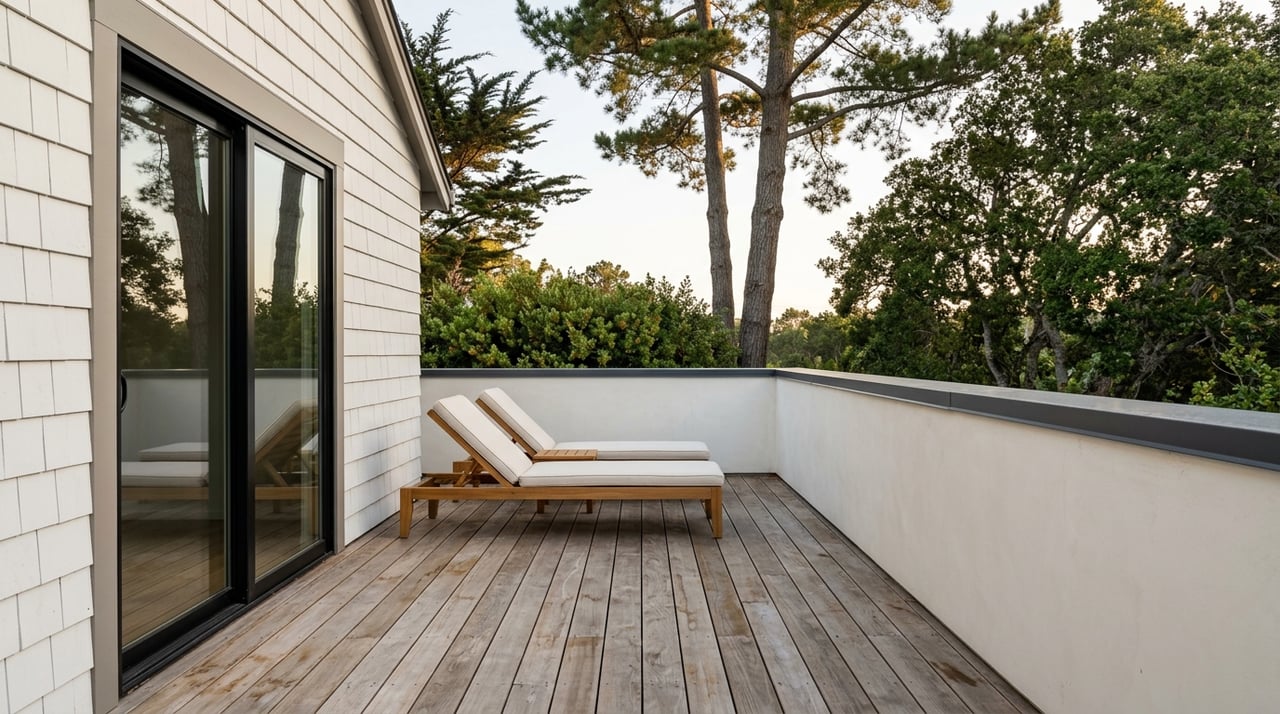
- Open terraces and bluff-oriented outlooks
- A stronger connection to shoreline trails and overlooks
- More expansive sky and changing coastal light
- A home setting that feels visually connected to the Pacific
For many buyers, that creates a retreat-like feel. The setting often puts more emphasis on the horizon, outdoor walks, and the visual drama of the coast.
Why the built environment feels low-profile
The coastal side of Cambria has design rules that help preserve a restrained look. The county sets a 15-foot maximum height for new buildings between Highway One and the ocean, and some ocean-side streets and Moonstone Beach areas have additional low-height standards.
Moonstone Beach standards also call for native materials, subdued colors, wood-appearing roofing, and landscaping with native plants and trees. Road improvements in that area are not to include curbs, gutters, or sidewalks. Together, those standards tend to support low-profile coastal homes instead of a more urban or vertical look.
The tradeoffs of ocean exposure
The main tradeoff with ocean-view living is exposure. County materials note serious bluff-erosion issues in some Cambria areas, and drainage conditions matter too. The county’s drainage study notes that Marine Terrace drains directly west to the Pacific and can have localized flooding where low gradients and depressions collect runoff.
That does not mean an ocean-view property is the wrong choice. It means you will want to look closely at drainage patterns, bluff conditions where relevant, and how the specific lot handles weather and water movement.
Forest-View Living in Cambria
Forest-view living in Cambria usually means more tree canopy, more terrain variation, and a setting shaped by slope and vegetation. Pine Knolls, Happy Hill, and parts of West Lodge Hill are key examples, with wooded hills, ridges, gullies, and mixed vegetation defining the feel.
If ocean-view living is about openness, forest-view living is often about filtering and shelter. The landscape can make homes feel tucked in rather than spread out. For many buyers, that creates a quieter visual experience with a stronger sense of enclosure.
What forest-view homes often feel like
A forest-view property may appeal to you if you prefer:
- Tree-lined outlooks instead of broad horizon views
- A more screened and terrain-sensitive setting
- Hillside character with natural contours
- A home that feels visually integrated into the landscape
Privacy can feel stronger in these settings, but it is not automatic. Actual privacy still depends on lot size, setbacks, the home’s placement, and the surrounding subdivision pattern.
How design standards shape the look
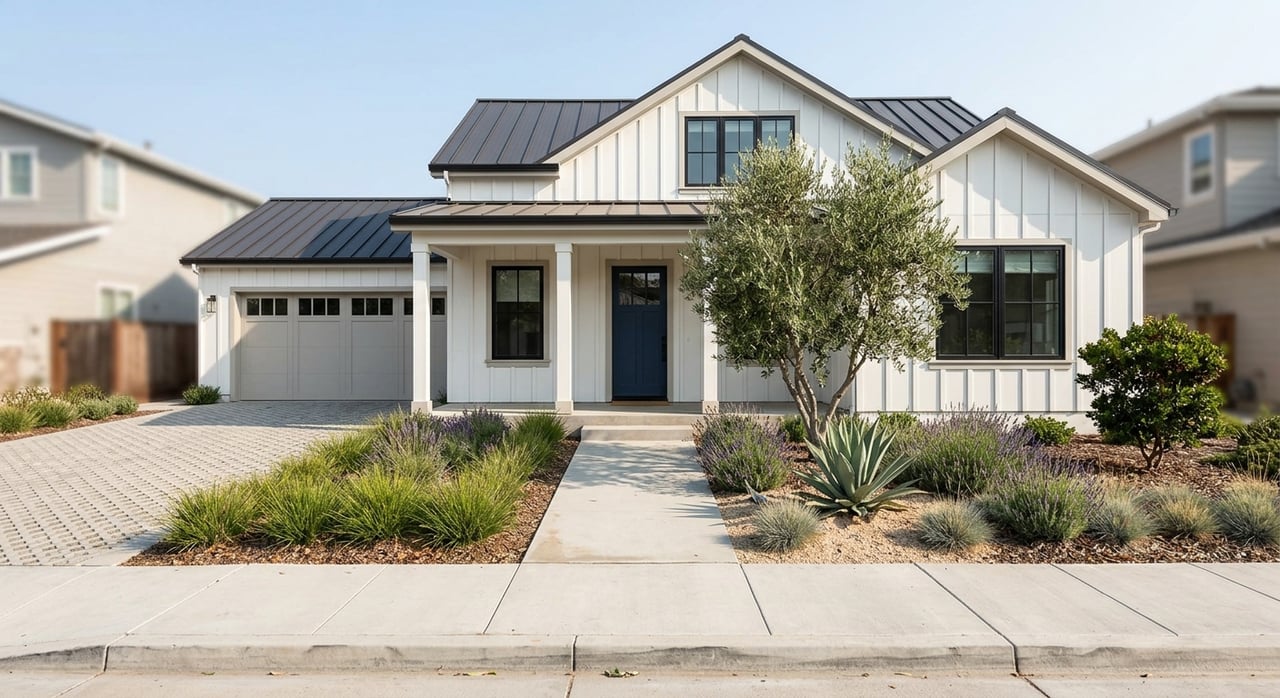
County design standards for forest settings encourage homes to blend with the site. Preferred materials include wood or wood-appearing siding such as board-and-batten or shingles, along with earth-tone colors and reduced apparent massing.
The county also encourages siting that follows natural contours and avoids unnecessary vegetation removal. In some cases, fire-resistant materials may be required. The overall result is a built environment that aims to feel part of the hillside rather than placed over it.
The tradeoffs of tree cover
The biggest practical tradeoff is vegetation management. County safety documents identify Cambria as an urban-wildland interface community, with wildfire hazard shaped by fuels, slope, weather, and topography. The coastal climate can help moderate risk, but it does not remove it.
If you choose a forest-view home, you will likely need to pay more attention to defensible space, tree maintenance, and fire-hardening. For many buyers, that upkeep is part of the package that comes with the beauty of a wooded setting.
Lot Size and Home Scale Matter
One of the most important things to understand in Cambria is that a view type does not always predict lot size. County materials note that many of Cambria’s historic residential tracts were laid out in the 1920s on small lots, often 25 by 70 feet. That pattern still shapes the feel of many residential streets.
This is especially important if you assume an ocean-view home always means a larger site, or that a forest-view home always means more land. Some wooded neighborhoods include classic small lots, while areas like Pine Knolls and Happy Hill also include medium-to-large parcels and newer homes in certain sections.
The county also provides tools and supplements showing that building footprint and gross structural area depend on property location and lot size. In other words, the specific parcel matters as much as the general setting.
Which Setting Gets More Light?
In general, ocean-facing properties usually have more open exposure. With fewer visual barriers, they often feel brighter and more open across the day.
Still, Cambria’s marine climate can shift that experience quickly. Morning fog is common, and afternoon sunshine can change the mood of a property in just a few hours. A bright coastal outlook in the afternoon may feel soft and misty earlier in the day.
Forest-view homes often have more filtered light because of tree canopy and terrain. If you enjoy a softer, more sheltered feel, that may be a plus rather than a drawback.
Which Setting Feels More Private?
Forest-view areas often feel more screened because of trees, slopes, and the way homes are designed to blend into the landscape. That can create a more tucked-away experience, especially on terrain-sensitive sites.
Ocean-view settings usually feel more open and exposed. The same openness that creates dramatic outlooks can also reduce the sense of enclosure.
But privacy in Cambria is always property-specific. You will want to look at lot pattern, neighboring homes, elevation, and vegetation rather than rely only on the label of ocean or forest.
Which Setting Is Easier to Maintain?
There is no universal winner here. Ocean-view homes may bring more attention to drainage, runoff, and bluff-related conditions depending on location.
Forest-view homes may bring more attention to tree care, defensible space, and fire-conscious maintenance. The easier choice is usually the one that best matches the kind of ongoing care you feel comfortable managing.
Shared Practical Notes for Cambria Buyers
No matter which setting you prefer, some practical realities apply across town. Cambria Community Services District states that all of Cambria’s water comes from wells in the San Simeon and Santa Rosa Creek basins, rainfall is seasonal, and conservation is a way of life.
CCSD also states that properties within its service area must be served by CCSD water and sewer, and potable wells are not permitted there. If you are comparing homes, utility and service details should stay on your checklist right alongside the view.
Cambria also has a compact village pattern. The county describes East Village as the principal shopping and service center, located in the narrow valley carved by Santa Rosa Creek. So whether you choose ocean-view or forest-view living, your day-to-day routine still connects back to the same small-town core.
How to Choose the Right Cambria Fit
The best choice usually comes down to how you want your home to feel when you wake up and settle in at the end of the day. If you want openness, horizon, and a stronger coastal presence, an ocean-view setting may fit you best.
If you prefer trees, shelter, and a more filtered everyday feel, a forest-view setting may be the better match. And in Cambria, some of the most interesting homes sit somewhere in between, especially near Park Hill, West Lodge Hill, and Fiscalini Ranch.
When you look past the label and focus on the lot, terrain, light, and maintenance profile, your decision often becomes much clearer. If you want help comparing Cambria properties with a local, steady hand, connect with Jan Sanderlin for personalized guidance.
FAQs
What is the difference between ocean-view and forest-view living in Cambria?
- Ocean-view living in Cambria usually offers more open sky, wider sightlines, and a stronger connection to the coastline, while forest-view living often offers more tree cover, slope-driven character, and a more sheltered feel.
Which Cambria areas can include both ocean and forest elements?
- Areas like Park Hill, West Lodge Hill, and Fiscalini Ranch can include a blend of open coastal outlooks, wooded terrain, and varied topography rather than fitting neatly into one category.
Do ocean-view homes in Cambria always have larger lots?
- No. Many historic Cambria subdivisions were laid out on small 25-by-70-foot lots, so an ocean-view home can still feel compact depending on the tract and parcel.
Do forest-view homes in Cambria always feel more private?
- Not always. Forest-view areas often feel more screened, but privacy still depends on lot size, setbacks, home placement, terrain, and nearby development patterns.
What maintenance issues matter for ocean-view homes in Cambria?
- Depending on the location, ocean-view homes may require closer attention to drainage, runoff, localized flooding conditions, and bluff-related issues.
What maintenance issues matter for forest-view homes in Cambria?
- Forest-view homes often require more attention to defensible space, vegetation management, tree maintenance, and fire-hardening because Cambria is identified as an urban-wildland interface community.
What water-service facts should Cambria homebuyers know?
- Cambria Community Services District says the town’s water comes from wells in the San Simeon and Santa Rosa Creek basins, conservation is part of daily life, and properties in the CCSD service area must use CCSD water and sewer.